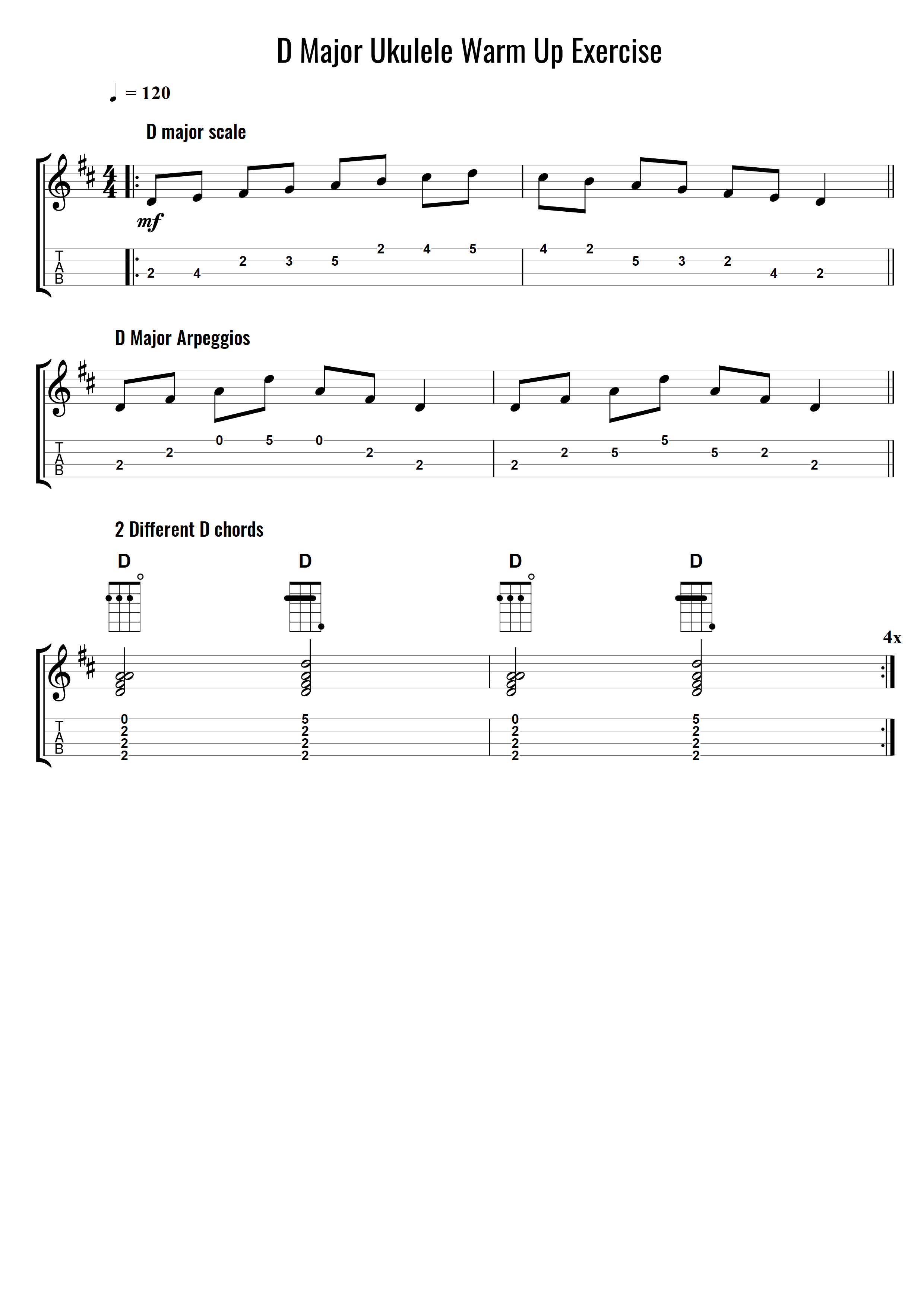
Here is a quick 1-2 mins warm up for you to try at the start of your ukulele practice.
You will play a D major scale, then 2 D major arpeggios, then 2 different D chords. Then you will repeat this until you have played it 4 times around.
A blog to help with learning and teaching Guitar, Ukulele, Bass Guitar and Piano. Written by Theo Lawrence / TL Music Books.
Here is a quick 1-2 mins warm up for you to try at the start of your ukulele practice.
You will play a D major scale, then 2 D major arpeggios, then 2 different D chords. Then you will repeat this until you have played it 4 times around.
We’re still in lockdown in Wales (UK), and we can only travel 5 miles. I’ve been busy teaching online lessons and also have done a lot of DIY projects around the house. I thought I would have had loads of time to update my blogs but I’ve been too busy! However, my students that have carried on have been burning through their grades and practicing more than ever. Here are a few scales warm ups I’ve been adding to their new practice plans, which I’ve been writing with google docs and sending the parents a link to so they can see updated practice notes whenever I add new things to it.
At the end of the post, there is also a bonus chord exercise challend for you to try.
These scales, arpeggios and chords exercises are good for any beginner or intermediate player that has been learning guitar for a while and has the ability to read tab. You might be used to reading proper sheet music, like on the rest of the website, but the tab is essentially the same. You have 6 lines (4 for ukulele), and the top line is the bottom string on the instrument. So the bottom line on the tab is the thickest string on the guitar. You’ll see tab elsewhere on the internet like on ultimate-guitar.com, so hopefully everyone will be able to read these.
Hopefully you can find these an enjoyable way to warm up whilst stuck at home. Run through all of these as a warm up so you’re not neglecting your scales, and then go and learn something else like you would in a guitar lesson. Perhaps learn a song or maybe some chord progression exercises or learn to play a guitar solo from a song you like.
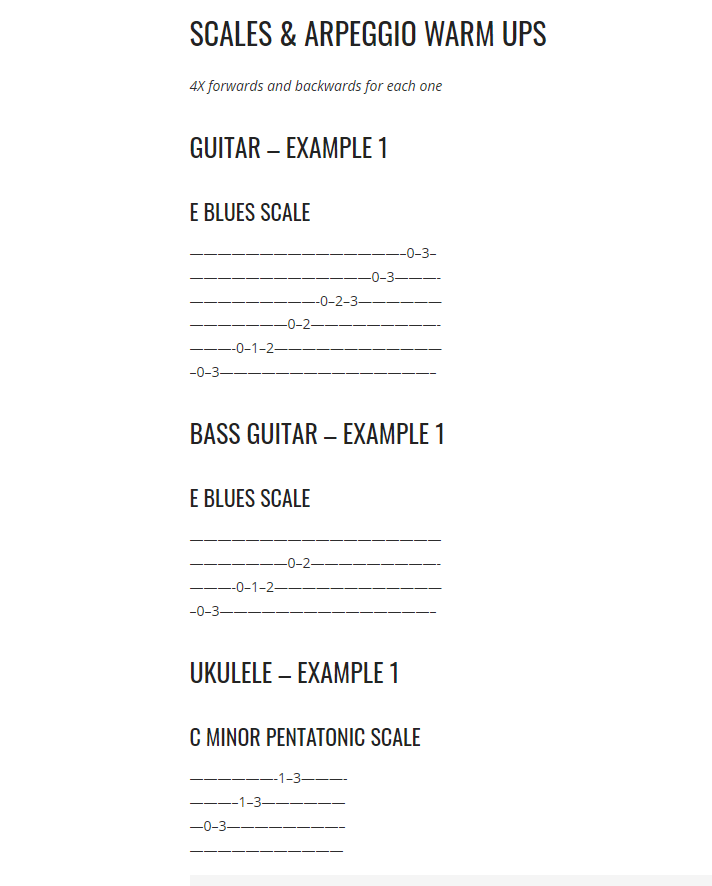
4X forwards and backwards for each one
———————————————–0–3–
—————————————0–3———-
—————————-0–2–3——————
———————0–2—————————-
———-0–1–2————————————
–0–3———————————————–
Fret 5 = 1st finger, Fret 6 = 2nd Finger, Fret 7 = 3rd finger, Fret 8 = 4th finger
————————————–5–8——
——————————–5–8————
————————–5–7——————
——————5–7————————–
———-5–7———————————-
–5–8——————————————
———————————————————5–7–8–
———————————————5–7–8————-
———————————-4–5–7————————
———————–4–5–7———————————–
————3–5–7———————————————-
-3–5–7———————————————————
Fret 4 = 1st finger, Fret 5 = 2nd Finger, Fret 6 = 3rd finger, Fret 7 = 4th finger
————————–5—-
———————-5——–
——————6————
————–7—————-
——4–7———————
–5—————————-
Fret 5 = 1st finger, Fret 6 = 2nd Finger, Fret 7 = 3rd finger, Fret 8 = 4th finger
————————–5—–
———————-5———
——————5————-
————–7—————–
———-7———————
–5–8————————–
4X forwards and backwards for each one
——————————————————
———————0–2—————————-
———-0–1–2————————————
–0–3———————————————–
Fret 5 = 1st finger, Fret 6 = 2nd Finger, Fret 7 = 3rd finger, Fret 8 = 4th finger
————————————————
——————5–7————————–
———-5–7———————————-
–5–8——————————————
———————————-4–5–7—9—11–12—-
———————–4–5–7——————————–
————3–5–7——————————————-
-3–5–7——————————————————
Fret 4 = 1st finger, Fret 5 = 2nd Finger, Fret 6 = 3rd finger, Fret 7 = 4th finger
——————————-
————–7—————-
——4–7———————
–5—————————-
Fret 5 = 1st finger, Fret 6 = 2nd Finger, Fret 7 = 3rd finger, Fret 8 = 4th finger
——————————–
————–7—————–
———-7———————
–5–8————————–
4X forwards and backwards for each one
——————-1–3———-
———–1–3——————
—0–3————————–
———————————
———————-0–2–3—-
———–0–1–3—————
—0–2————————–
———————————
——————-3–5———-
———–3–5——————
—2–5————————–
———————————
———————-2–4–5—-
———–2–3–5—————
—2–4————————–
———————————
—————————5–7——-
—————5–7–8—————-
—4–6–7—————————-
————————————–
Set a countdown timer for 1 minute. Strum each chord once and then repeat when you have done all 3 chords. Count how many times you go around them in 1 minute.
Challenge 1: A, D, E.
Challenge 2: E, A7, B7.
Challenge 3: A7, D7, E7.
Challenge 4: Am Dm7 G.
Challenge 5: C F G.
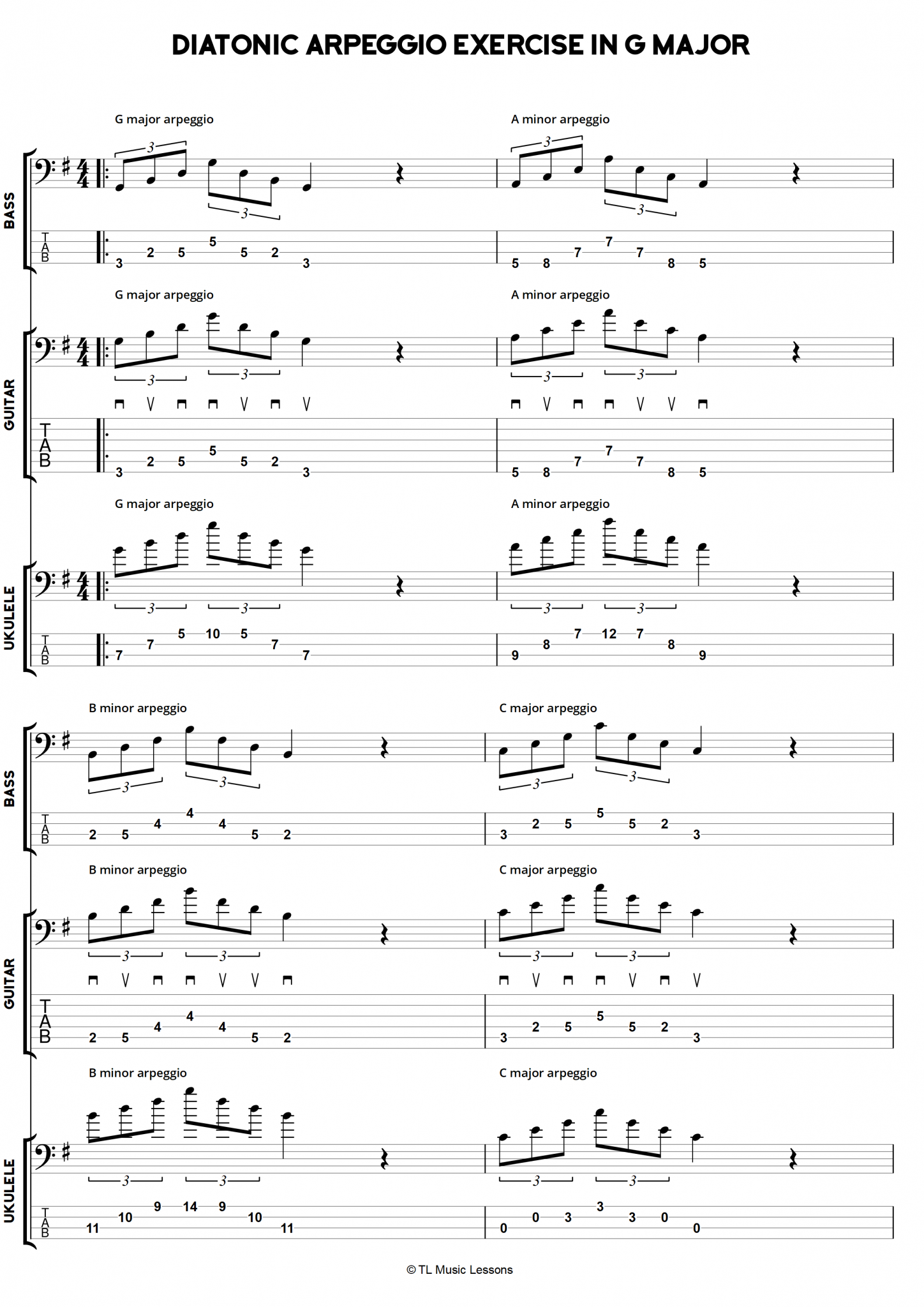
This arpeggios exercise has a sequence of 8 arpeggios and has sheets for Guitar, Bass and Ukulele.
The guitar and bass sheets are essentially the same, although the guitar part has picking instructions for downs and ups. For bass, you could probably use the guitar downs and ups. I use my fingers on the bass and I would play these with a walking right left right left of the first two fingers. I think most people start with their left finger (index finger) but I’ve always led with might right finger (middle finger), because following a RLRL pattern is more familiar as I play drums too.
The diatonic sequence is going up the G major scale and making each note into a chord that theoretically fits, and in this case turning them into an arpeggio.
With the repeat at the end, I have suggested to play through the sheet 2 times as a whole exercise. You may like to practice each arpeggio individually at first or if you are making mistakes.
A Guitar Version is also available.
This easy reading Ukulele book has been created using Adobe Illustrator so that the basics of song melodies, scales, arpeggios and warm up exercises can be taught, learned and read in the easiest and clearest way possible for beginners of all ages.
4. How To Read The Music
5. Twinkle Twinkle Little Star (FREE)
6. Happy Birthday
7. Ukulele Warm Up 1
8. London Bridge
9. Sheet 1 – Scales (FREE)
10. Morning Has Broken
11. Ukulele Warm Up 2
12. Amazing Grace
13. Arpeggios & Chords
14. Can Can
15. Camptown Races
16. Frère Jacques
17. Sheet 2 – Scales
18. Sheet 3 – Scales
19. Sheet 5 – Scales
20. Sheet 6 – Scales
This easy reading ebook is a compilation of 3 and a half years of preparation work teaching ukulele to a wide range of abilities and also from 9 years of teaching guitar, which has influenced and helped my teaching and playing of the ukulele.
I tested some of these sheets over the last 6 months until I was ready to create the rest of the book. I have found that the format that I have created takes away any unnecessary distractions in order to teach the basics without distractions and confusion. I believe it solves problems with reading the music for beginners of any age, but particularly for young beginners.
I decided to create this range of sheets like this one to make both my life easier and to help my students get to grips with reading tab quicker for playing scales, public domain songs, traditional songs, arpeggios and warm up exercises. I have created the sheets using Adobe Illustrator.
The finger suggestions are a guide to what I recommend to my students. There are different ways of playing the scales so it’s ok to do what works for you. Just don’t use 1 finger for all of it! Younger players think it’s faster at first, but it’s really not in the long run.
Ukulele teachers can use this ebook in their own teaching and they are welcome to print physical copies for their students.