Warm Up Tabs for Guitar, Bass & Ukulele – Scales & Arpeggios

We’re still in lockdown in Wales (UK), and we can only travel 5 miles. I’ve been busy teaching online lessons and also have done a lot of DIY projects around the house. I thought I would have had loads of time to update my blogs but I’ve been too busy! However, my students that have carried on have been burning through their grades and practicing more than ever. Here are a few scales warm ups I’ve been adding to their new practice plans, which I’ve been writing with google docs and sending the parents a link to so they can see updated practice notes whenever I add new things to it.

At the end of the post, there is also a bonus chord exercise challend for you to try.

These scales, arpeggios and chords exercises are good for any beginner or intermediate player that has been learning guitar for a while and has the ability to read tab. You might be used to reading proper sheet music, like on the rest of the website, but the tab is essentially the same. You have 6 lines (4 for ukulele), and the top line is the bottom string on the instrument. So the bottom line on the tab is the thickest string on the guitar. You’ll see tab elsewhere on the internet like on ultimate-guitar.com, so hopefully everyone will be able to read these.

Hopefully you can find these an enjoyable way to warm up whilst stuck at home. Run through all of these as a warm up so you’re not neglecting your scales, and then go and learn something else like you would in a guitar lesson. Perhaps learn a song or maybe some chord progression exercises or learn to play a guitar solo from a song you like.

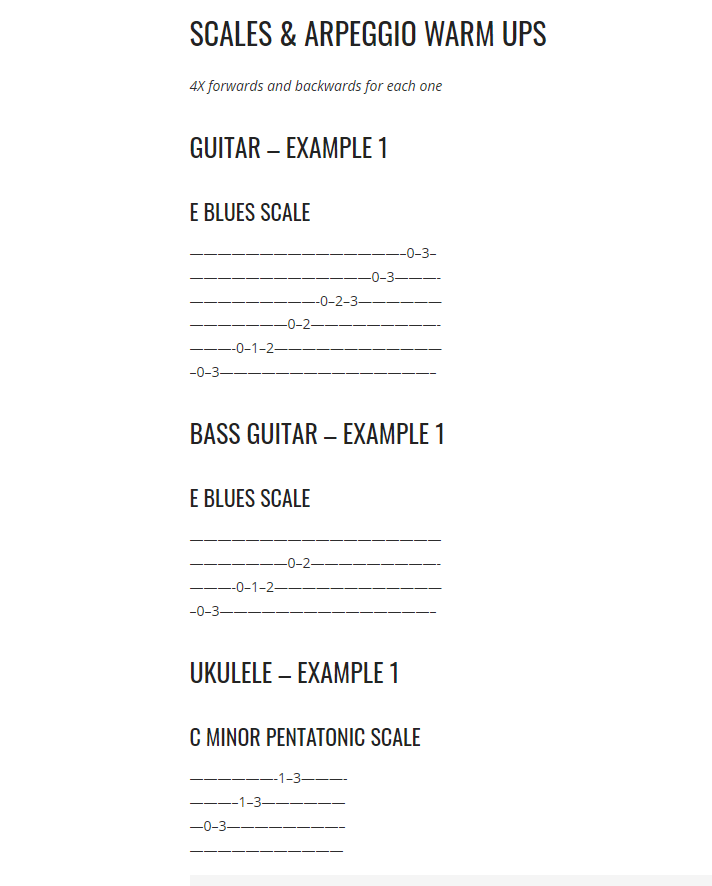
Scales & Arpeggio Warm Ups – Guitar

4X forwards and backwards for each one

E Blues scale

———————————————–0–3–
—————————————0–3———-
—————————-0–2–3——————
———————0–2—————————-
———-0–1–2————————————
–0–3———————————————–

A minor pentatonic scale

Fret 5 = 1st finger, Fret 6 = 2nd Finger, Fret 7 = 3rd finger, Fret 8 = 4th finger

————————————–5–8——
——————————–5–8————
————————–5–7——————
——————5–7————————–
———-5–7———————————-
–5–8——————————————

G major scale

———————————————————5–7–8–
———————————————5–7–8————-
———————————-4–5–7————————
———————–4–5–7———————————–
————3–5–7———————————————-
-3–5–7———————————————————

A major arpeggio

Fret 4 = 1st finger, Fret 5 = 2nd Finger, Fret 6 = 3rd finger, Fret 7 = 4th finger

————————–5—-
———————-5——–
——————6————
————–7—————-
——4–7———————
–5—————————-

A minor arpeggio

Fret 5 = 1st finger, Fret 6 = 2nd Finger, Fret 7 = 3rd finger, Fret 8 = 4th finger

————————–5—–
———————-5———
——————5————-
————–7—————–
———-7———————
–5–8————————–


Scales & Arpeggio Warm Ups – Bass Guitar

4X forwards and backwards for each one

E Blues scale

——————————————————
———————0–2—————————-
———-0–1–2————————————
–0–3———————————————–

A minor pentatonic scale

Fret 5 = 1st finger, Fret 6 = 2nd Finger, Fret 7 = 3rd finger, Fret 8 = 4th finger

————————————————
——————5–7————————–
———-5–7———————————-
–5–8——————————————

G major scale

———————————-4–5–7—9—11–12—-
———————–4–5–7——————————–
————3–5–7——————————————-
-3–5–7——————————————————

A major arpeggio

Fret 4 = 1st finger, Fret 5 = 2nd Finger, Fret 6 = 3rd finger, Fret 7 = 4th finger

——————————-
————–7—————-
——4–7———————
–5—————————-

A minor arpeggio

Fret 5 = 1st finger, Fret 6 = 2nd Finger, Fret 7 = 3rd finger, Fret 8 = 4th finger

——————————–
————–7—————–
———-7———————
–5–8————————–

Scales & Arpeggio Warm Ups – Ukulele

4X forwards and backwards for each one

C minor pentatonic scale

——————-1–3———-
———–1–3——————
—0–3————————–
———————————

C major scale

———————-0–2–3—-
———–0–1–3—————
—0–2————————–
———————————

D minor scale

——————-3–5———-
———–3–5——————
—2–5————————–
———————————

D major scale

———————-2–4–5—-
———–2–3–5—————
—2–4————————–
———————————

E natural minor scale

—————————5–7——-
—————5–7–8—————-
—4–6–7—————————-
————————————–


Bonus Chord Exericse

How many times can you play these chords in 1 minute?

Set a countdown timer for 1 minute. Strum each chord once and then repeat when you have done all 3 chords. Count how many times you go around them in 1 minute.

Challenge 1: A, D, E.
Challenge 2: E, A7, B7.
Challenge 3: A7, D7, E7.
Challenge 4: Am Dm7 G.
Challenge 5: C F G.
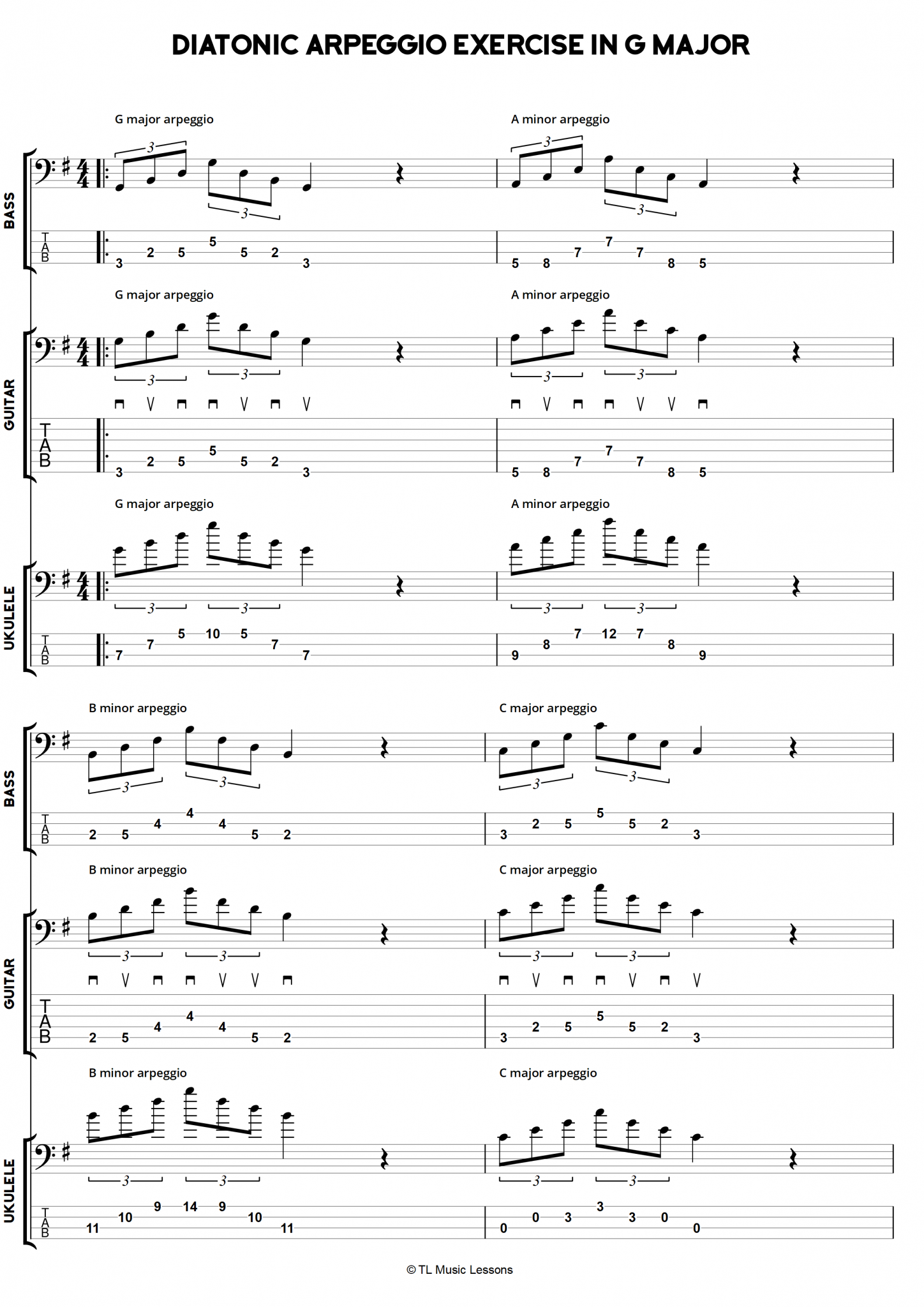
Diatonic Arpeggio Exercise in G Major

This arpeggios exercise has a sequence of 8 arpeggios and has sheets for Guitar, Bass and Ukulele.

The guitar and bass sheets are essentially the same, although the guitar part has picking instructions for downs and ups. For bass, you could probably use the guitar downs and ups. I use my fingers on the bass and I would play these with a walking right left right left of the first two fingers. I think most people start with their left finger (index finger) but I’ve always led with might right finger (middle finger), because following a RLRL pattern is more familiar as I play drums too.

The diatonic sequence is going up the G major scale and making each note into a chord that theoretically fits, and in this case turning them into an arpeggio.

With the repeat at the end, I have suggested to play through the sheet 2 times as a whole exercise. You may like to practice each arpeggio individually at first or if you are making mistakes.

Free File Downloads

Guitar PDF
Bass PDF
Ukulele PDF
Guitar Pro 7 File

(PREMIUM) – Grade 3-4 Ebook – Scales, Arpeggios, Barre Chords and Guitar Solo Exercises

Buy Now →

The Buy Now button will take you to the product page. There you can download a free 9 page preview by clicking the ‘Preview’ link at the top right of the cover image.


3. Contents
4. Introduction
5. Scales & Arpeggios: Grade 3 – Fretboard Shapes
6. Grade 3 Scales in G
7. Grade 3 Scales in A
8. Grade 3 Scales in B
9-10. B minor pentatonic scale exercises (8th notes)
11 . Grade 3 Arpeggios in A, B and G (major & minor)
12-13. Arpeggio Chord Progressions
14. Notes on the Fretboard for Grade 3+
15. Grade 3 barre chord shapes
16. Part 1 – grade 3 barre chord progression exercises
17. Part 2 – grade 3 barre chord progression exercises
18. 12 bar blues solo in G
19. Guitar Solo in Gm
20. 12 bar blues solo in A
21. Fallout Guitar Solo in Em
22-23. Grade 3 Chords, Scales and Arpeggios Exercises
24. Grade 4 barre chord shapes
25. Part 1 – grade 4 barre chord progression exercises
26. Part 2 – grade 4 barre chord progression exercises
27-29. B minor pentatonic scale exercises (8ths, triplets and 16th notes)
30-32. Grade 4 Chords, Scales and Arpeggios Exercises
33. Songwriting Cheat Sheet

Introduction

  • Guitar teachers can print the book or single sheets for their students.
  • Guitarists can teach themselves following on from a strong basic foundation in reading and playing
  • Guitarists that want to build up a foundation in the core aspects of Grade 3-4.

About the book

This Grade 3-4 ebook is a compilation of almost 9 years of preparation work teaching guitar. I have included guitar lesson sheets that I have prepared and revised many times over the 9 years to be the best they can be for use with my lessons.

To create the book I selected only the best sheets from my selection of many more that I created for teaching with. I printed them all out and arranged them into a coherent order. Finally, I created and modified a few more just to make the book run smoothly.

I have included only the sheets, rather than add lots of teaching text you might normally find in tuition books. This is partly to limit the amount of pages for those printing, and also to give teachers using the books freedom to put their own take on the lesson sheets. Personally when I get a tuition book for myself, I tend to go straight to the exercises. This will probably make it harder for self taught players, so to anyone getting stuck reading the book I would recommend giving it a go and if you get stuck, research how to read the parts you struggle with. There are plenty of youtube videos out there and help articles that you will find to help. Sometimes youtube videos lack sheet music and written parts, so you should be able to use this book alongside these popular methods of learning, if you are not learning with a teacher.

Guitar teachers can use this ebook as a guide for their own teaching. These are the core parts of grade 3-4 but it does not nearly cover every aspect of these levels, so you can dip in and out of this book with your teaching. Let the book provide a fundamental knowledge to the student and loosely give structure and a guide to your teaching and allow yourself to go off on tangents as you and the students move through the book. The key thing here is to tailor your teaching to the students, because they’re all different and will require different paths to explore their own style and learning experience.

Each topic in the book is briefly covered. There is much more depth you could go into, and this is encouraged. So far, I have already released another ebook that works more on rhythms with barre chords in chord progressions at grade 3-4 level called 10 Group Chord Exercise Sheets – Grades 1-4.

Free Preview / Buy Now →

6 major and minor arpeggio practice exercises with Chord Progressions – Grade 3-4

These exercises are from this Premium PDF Ebook →

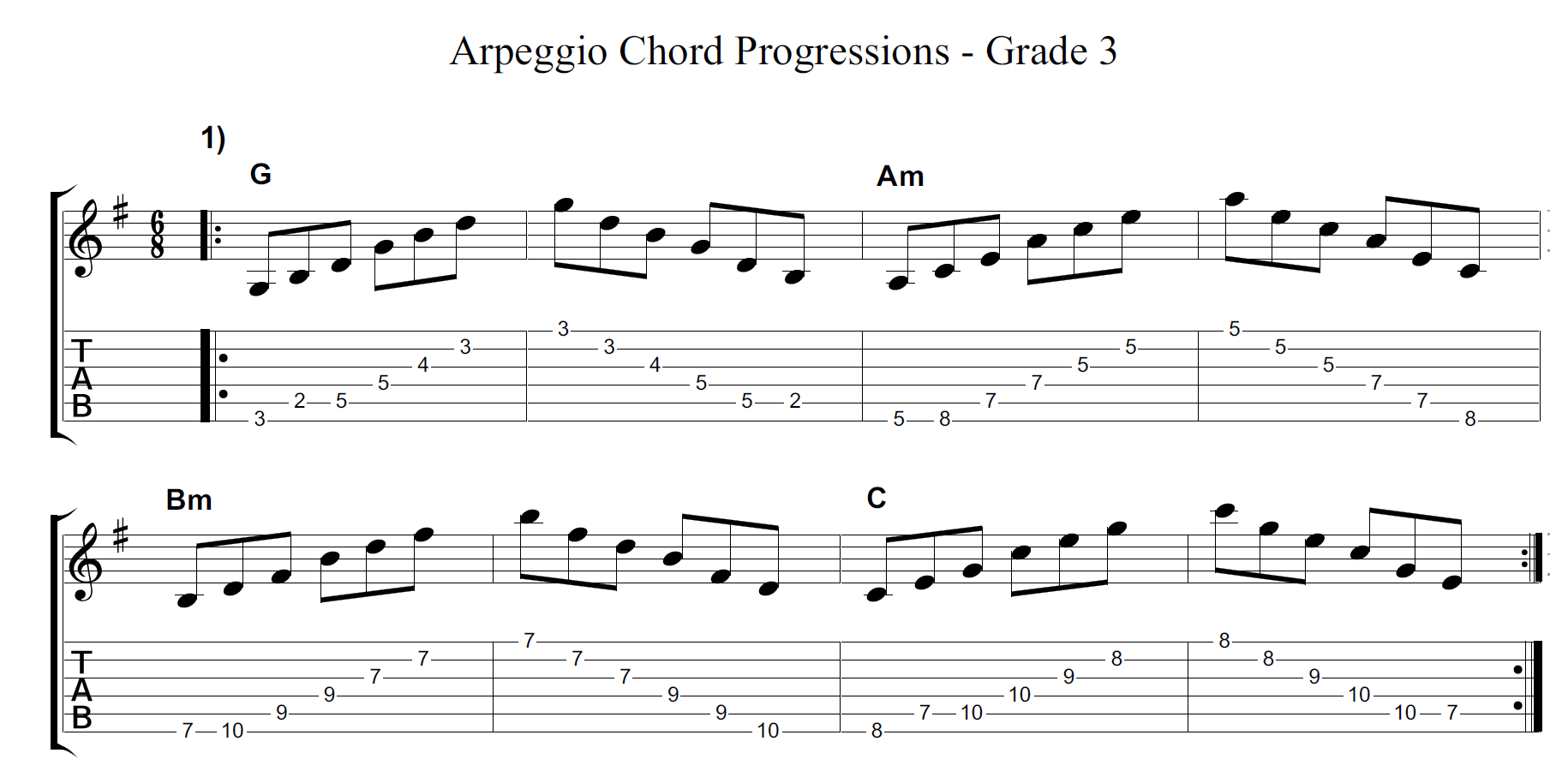
Either follow the steps below, or purchase the PDF ebook linked above to access the arpeggio exercises on pages 12-13.

For these 6 arpeggio chord progression exercises, we will be working on the two grade 3 arpeggio shapes: 2 octave major arpeggio, and the 2 octave minor arpeggio.

Please ignore the repeat markings on the notation when you play along with the backing tracks.

The backing tracks above may be helpful for practicing along with. They are only 1 speed, so if you wanted to, you could record yourself playing the chord progression and then practice playing along. If using these exercises in a music lesson, a guitar teacher could play the chords whilst the student plays the arpeggios. Or, you could play them along with a metronome at various speeds – nothing wrong with that!

Exercise 1

This exercise uses the chord progression: G, Am, B, C. The arpeggios are based on these chords.

Exercise 2

This exercise uses the chord progression: Am, C, Em, F. The arpeggios are based on these chords.

Exercise 3

This exercise uses the chord progression: Bm, A, F#m, G. The arpeggios are based on these chords.

Exercise 4

This exercise uses the chord progression: C, Am, G, Dm. The arpeggios are based on these chords.

Exercise 5

This exercise uses the chord progression: Fm, Ab, Bbm, Db. The arpeggios are based on these chords.

Exercise 6

This exercise uses the chord progression: Bb, Cm, Gm, F. The arpeggios are based on these chords.

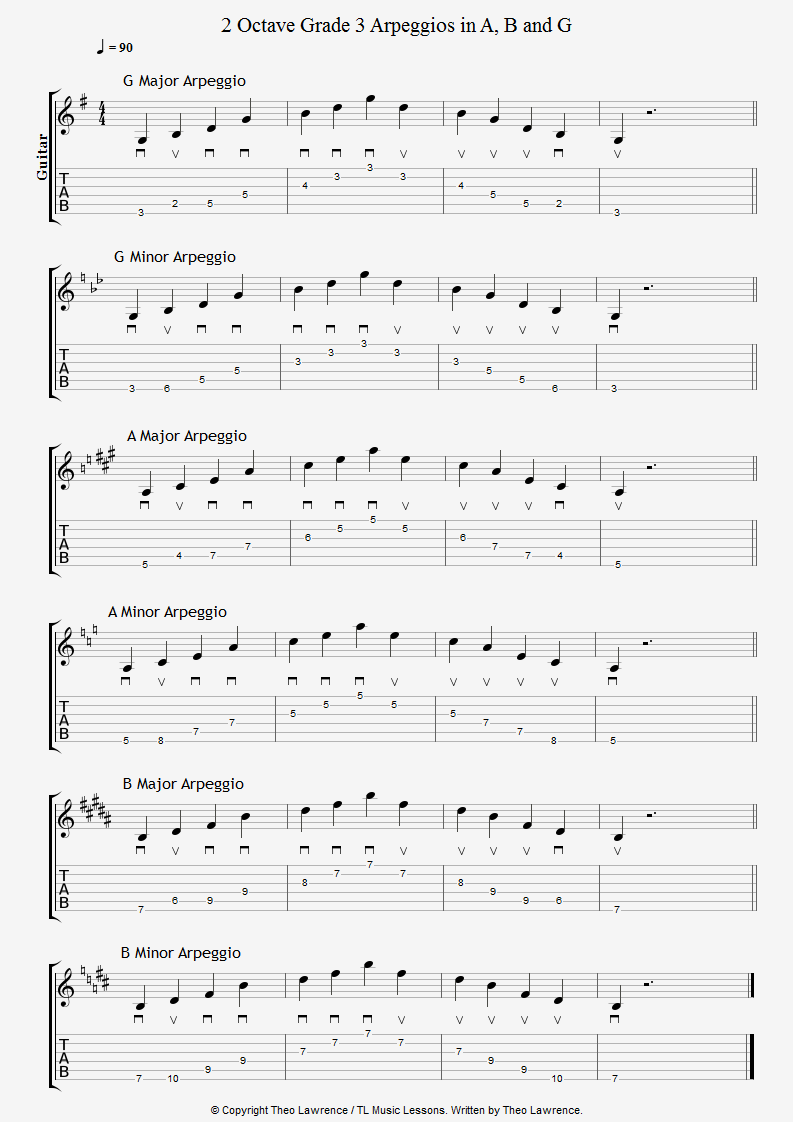
Grade 3 Arpeggios in A, B and G (Major + Minor Shapes) – 2 octaves – starting on the E string

This sheet includes:

  • G major Arpeggio – 2 Octaves
  • G minor Arpeggio – 2 Octaves
  • A major Arpeggio – 2 Octaves
  • A minor Arpeggio – 2 Octaves
  • B major Arpeggio – 2 Octaves
  • B minor Arpeggio – 2 Octaves

This sheet has been created for guitarists studying Rockschool Grade 3 guitar (base on the 2012-18 syllabus). It is recommended that you follow the picking as notated. All three keys need to be prepared for, so all three are included in the download. The root notes are located on fret 3, 5 and 7 of the E string.

These arpeggios are also in the Grade 3 RGT syllabus, but you’ll need to be able to play them in any position on the E string. Once you play through all of these though, you’ll soon get used to the 2 shapes.

Arpeggiated Chord Progressions using G6 Em7 A7sus2 Cmaj7 Dsus2

Here are some exercises to work on your picking technique, and for learning how to arpeggiate chords.

feel free to repeat the chord progressions for as long as you like, or just play through once.


The Chords

Before we get started, let’s just run through all the chords that will be used.


The Chord Progressions Audio Examples

Arpeggiated Chord Progression 1: G6, Cmaj7, Dsus2, Dsus2

Bar 1: Arpeggiated G6 Chord

Play 4 down strokes starting on the big E string, then 4 up strokes starting on the little E string.

Bar 2: Arpeggiated Cmaj7 Chord

Play 4 down strokes starting on the A string, then 4 up strokes starting on the little E string.

Bar 3: Arpeggiated Dsus2 Chord

Play 3 down strokes starting on the D string, then 3 up strokes starting on the little E string. The rhythm here is “1 + 2… 3 + 4….”, which is like “quick quick slow, quick quick slow”.

Bar 4: Arpeggiated Dsus2 Chord

The same as bar 3.

Arpeggiated Chord Progression 2: Em7, G6, Dsus2, A7sus2

For the following arpeggiated chord progressions, they are played in the same sort of way to the first one, so I won’t display the step by step info again for these.

Arpeggiated Chord Progression 3: A7sus2, Cmaj7, G6, Dsus2


Arpeggiated Chord Progression 4: Cmaj7, G6, Dsus2, Em7


Arpeggiated Chord Progression 5: Cmaj7, Cmaj7, G6, Dsus2