All That Jazz: How to Get Started Playing Jazz Guitar

Photo credits: Marius Masalar and Katie Montgomery.

Guest post by Know Your Instrument.


Eager to begin your jazz guitar journey but don’t know where to start? You’ve come to the right place to get the top tips for jazz guitar beginners. Here we’ll discuss the things you need to do first when you set out to become a jazz player.

Ready? Here we go!

Get the basics down

We’re talking about guitar basics. If you’re going to be playing jazz, it’s a must for you to already be able to play the guitar, and play it well. If you are confident in your playing skills, have a good mastery of chords and scales and have a repertoire that includes a few jazz standards (‘The Girl From Ipanema,’ ‘My Funny Valentine,’ and ‘Fly Me to the Moon’ are a few examples), then you’re ready to focus on jazz music.

If you’re not quite there yet, then we suggest getting more practice time in. Supplement your learning with more songs from various artists so you can further develop your ear – and your playing style – for jazz music.

Get a good guitar

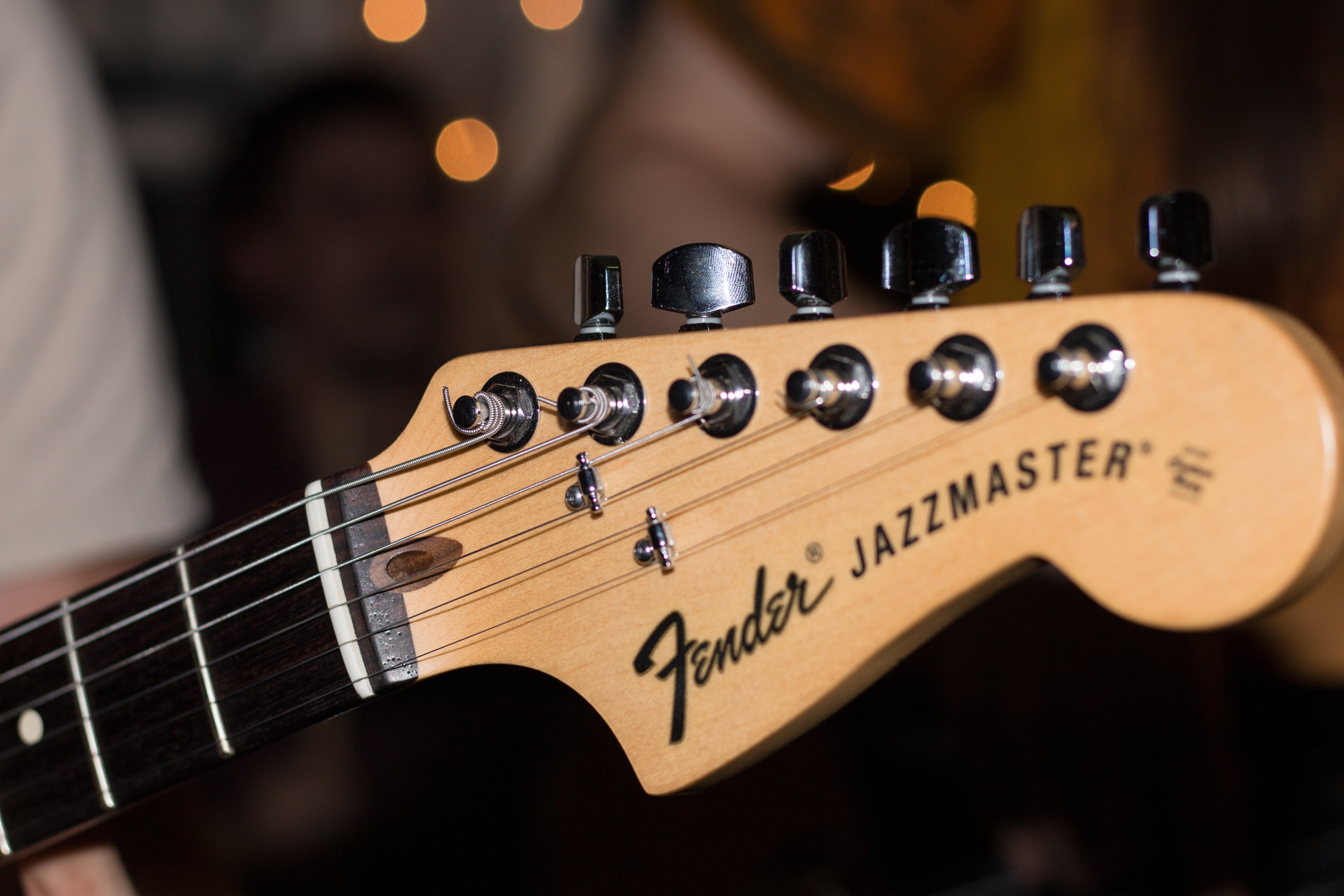
While you can definitely get a good jazz sound from a standard solid-body electric guitar, if you really want a really nice jazzy tone then you’ll have to get a guitar that’s designed for playing jazz music. Solid-body electrics are built more for rock, but there are those like the Fender Jazzmaster that’s really built for jazz.

Of course, nothing beats semi-hollowbody and hollowbody guitars when it comes to making jazz music. Some of the best guitars for jazz are of these body types. Check out the Gibson ES-335, Epiphone Sheraton II-PRO and the Ibanez Artcore AS73, which are all semi-hollow, and the Epiphone Emperor Swingster, which is a hollowbody guitar. For budget-conscious beginners, the Epiphone and Ibanez models come highly recommended.

Learn to read music


Legendary jazz guitarist Wes Montgomery couldn’t read notes but he didn’t really have to, being the fretboard genius that he was. Unfortunately, many of us don’t have the same natural, innate ability to create melodic lines and navigate our way across the fretboard without the aid of music sheets.

So, unless you have Montgomery’s talent, reading music is a skill you must learn to become a good jazz guitar player. This skill is a plus too if you’re looking to teach guitar or compose your own music in the future.

Expand your repertoire

Once you’ve started to listen to more jazz tunes and read music, you can now increase your repertoire and really learn to play jazz. Start with songs you like – learn to play the melody first and then the chords. Break down each section and get it right before moving on to the next.

The more you listen and play, the more you will be able to internalize the rhythms, melodies, harmonies and the various song forms in jazz music. You won’t simply be imitating or memorizing jazz standards, you will actually be expressing jazz. This will not only help you in doing improvisations but also in becoming a better jazz guitarist overall.

Final Word

The most important thing you need to do when you start learning jazz guitar is to develop a thirst for knowledge. Keep on learning and honing your playing skills and technique. Be conscious of what you still need to know and improve on to become a better player and work on it. Practice regularly and soon you’ll be able to improvise with ease, play sophisticated solos and express your own musical voice. Good luck!
Portable Keyboard for Practicing Piano: What to Look for?

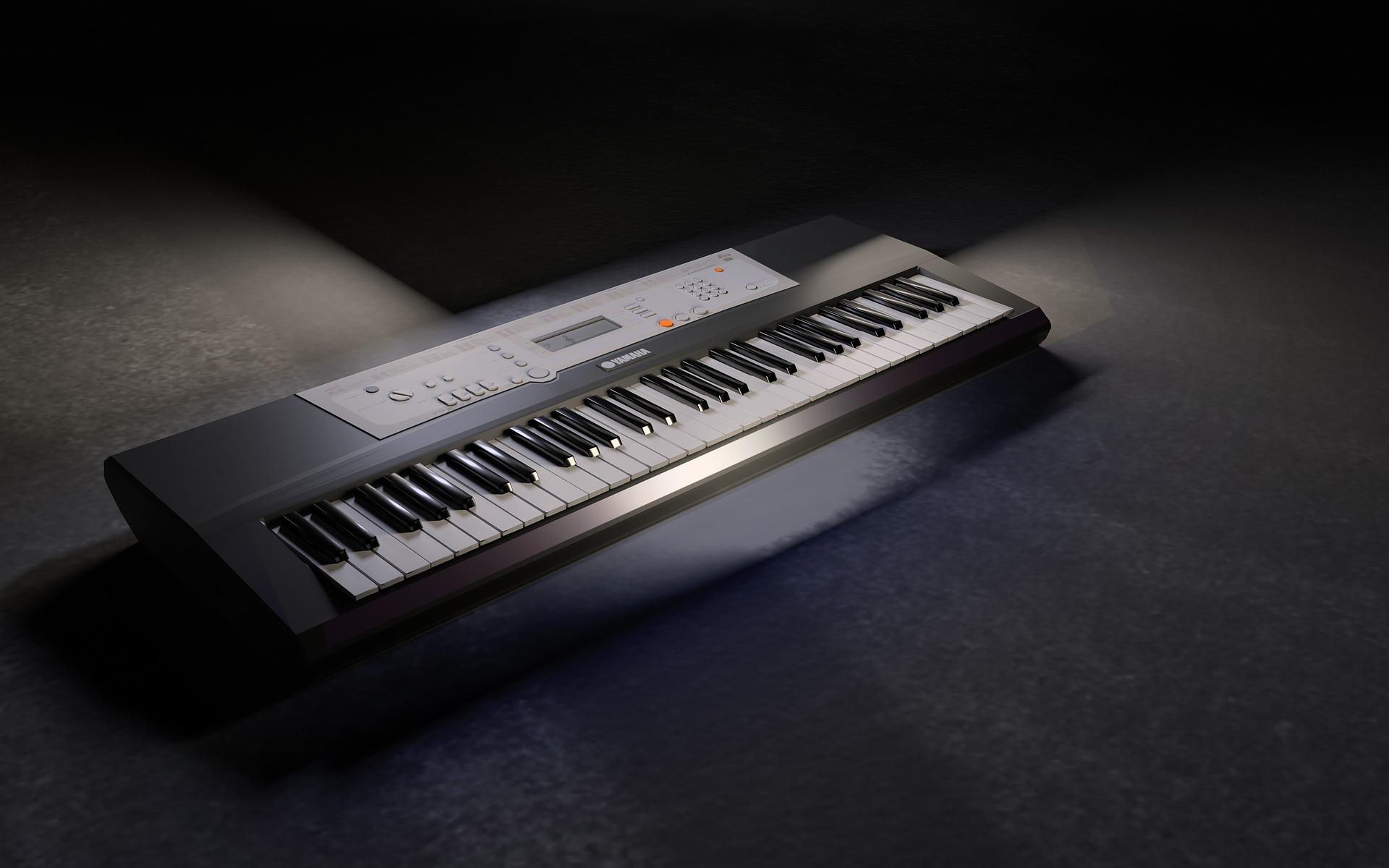
Image by PIRO4D from Pixabay.

In cooperation with consordini.com.


One of the biggest disadvantages of playing the piano is that you can’t throw it in a case and take it with you. This is why many pianists use portable keyboards for practicing piano.

A keyboard you can carry with you at no great inconvenience is wonderful, but it comes with very obvious compromises.

First, let’s talk about the glaring advantage, it’s portable! There are a lot of reasons that make having a portable keyboard an appealing option.

A common choice of keyboard for performers is the Nord Stage 3, it can be moved but it’s very heavy. Similar keyboards/synths have the same issue, Yamaha MOTIF, Roland Fantom, they are all heavy.

Many musicians choose to save these kinds of keyboards for gigging and take something much lighter to rehearsals.

You might be going on a trip that doesn’t involve performing at all but still want to practice piano. Even at home don’t underestimate the value of a portable keyboard.

If you have a busy household, finding a quiet spot to practice piano can be difficult. Having something you can move from room to room quickly and easily might be your only way.

For these reasons and many more, a portable keyboard is a very desirable option.

What it really comes down to is the question what do you need it for? Depending on your needs there will be acceptable and unacceptable sacrifices.

Sound Quality

Before even thinking about the obvious things like size and weight, let’s talk about sound.

If you are buying a portable keyboard primarily for practice, then the price will likely be a factor. High-end keyboards with amazing sounds tend to be heavy. Cheaper portable keyboards don’t tend to have the same quality or range of sounds. If you want it mainly to practice alone this won’t be as big an issue for you. But if you are using it for group rehearsals then it’s a different story.

In a group setting, you need to consider how much the actual sound affects the practice. For example, a song with a very specific synth sound may not feel the same with another sound. So, you have to consider both the positive and negative impact on your rehearsal time.

I should also be clear that you can get lightweight, portable keyboards with amazing quality and range of sound. That’s if you are happy to pay a higher price.

My first suggestion would be to consider sound quality versus price. This should help you figure out where you can and can’t sacrifice.

Number and Weight of Keys

Assuming the main purpose of the keyboard will be to practice the piano, then the number and kind of keys are very important. What I mean by this is using a piano sound more than say a synth or organ where weighted keys aren’t an issue.

The lowest number of keys I would consider worthwhile is 49 or 61. Anything below 49 really limits what you can practice. For practicing scales, modes and, harmony, 49 keys are absolutely fine. For practicing specific pieces, for example, classical music, you may run out of octaves fast. I would suggest 61 keys allow for a much wider range of use.

Most portable keyboards will have touch sensitive keys but not weighted keys. If you are practicing material where expression and feel are important, this will be an issue.

If you perform on weighted keys then the inconsistency between practice and performance could do more harm than good.

Graded soft touch is a term that you will hear often with portable keyboard keys. It means the keys gradually get heavier from low to high. Overall this offers a light feeling of weight in the keys but not quite semi-weighted.

Graded soft touch keys are often an acceptable compromise when you want to keep the weight down.

Overall Weight of the Unit

The overall weight is the biggest positive for a portable keyboard. The total weight of the keyboard is determined by the two factors we just covered, number and weight of keys.

The more keys you have, the longer the keyboard, the heavier it is. In the same fashion, non-weighted to semi-weighted to fully-weighted keys adds to the overall weight at each step.

Potential Options

In the 49-key range, all keyboards will be lightweight but there are some other things to consider. Many keyboards of 49 keys or less don’t have full-size keys, they have smaller, shorter keys. This is something I’d strongly avoid when practicing piano.

One example of 49 full-size keys is the Casio CTK-240. This keyboard has 100 built-in sounds, 100 rhythms and it’s very lightweight (6.2 lbs). If you just want a keyboard that makes a piano sound and can be taken anywhere, this is worth a look.

At 61 keys there are plenty of options, the Yamaha PSR range has been a mainstay in this category for decades. Here are a couple of options:

Yamaha PSR-E363: A portable keyboard with 61 velocity sensitive keys. It has over 500 built-in sounds, including some of Yamaha’s trademarked sounds usually found in more expensive keyboards. The PSR-E363 costs approximately $180 and weigh around 10 lbs.

Casio CTK-3500: 61 two-stage velocity sensitive keys with 400 built-in sounds. The CTK-3500 costs approximately $130 and weigh 7.4 lbs.

To give you something else to think about, if you have a laptop you can also consider MIDI controllers. You can get 88 semi-weighted keys, like the M-Audio Keystation for around $200.

So, 88 keys mean a longer keyboard, more awkward and less portable but it’s very, very light at 17 lbs. It comes with premium virtual instruments that will beat the sound quality of any of the other keyboards I mentioned above.

Summary

Whatever keyboard you choose it’s always going to be a trade-off of qualities. Sound vs weight vs key action vs price, naturally when one factor changes it alters the others.

Think about exactly what you want from it, prioritize your needs then find the best compromise.


Find more articles like this at consordini.com

Connection Between Guitar Fretboard And Piano Keyboard

  • How are guitar fretboard and piano keyboard related?
  • Will it be easier for guitarist learn piano notes or pianist learn guitar notes?

Today, our guest Neil from Sublimelody.com brings us a visual guide to answer two questions above.

Let’s get started.

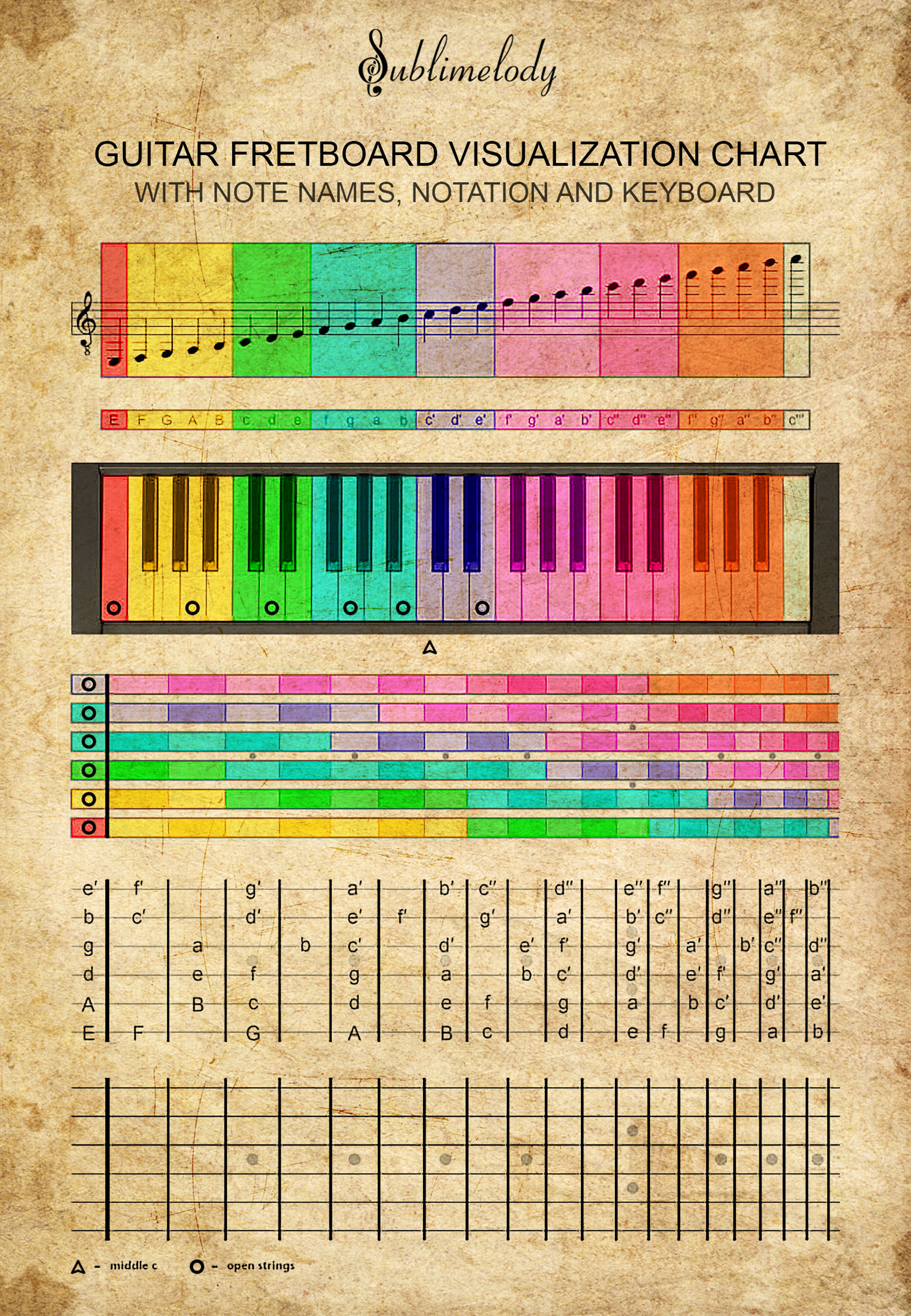
1. Music Notes And Fret-Strings On The Guitar Fretboard

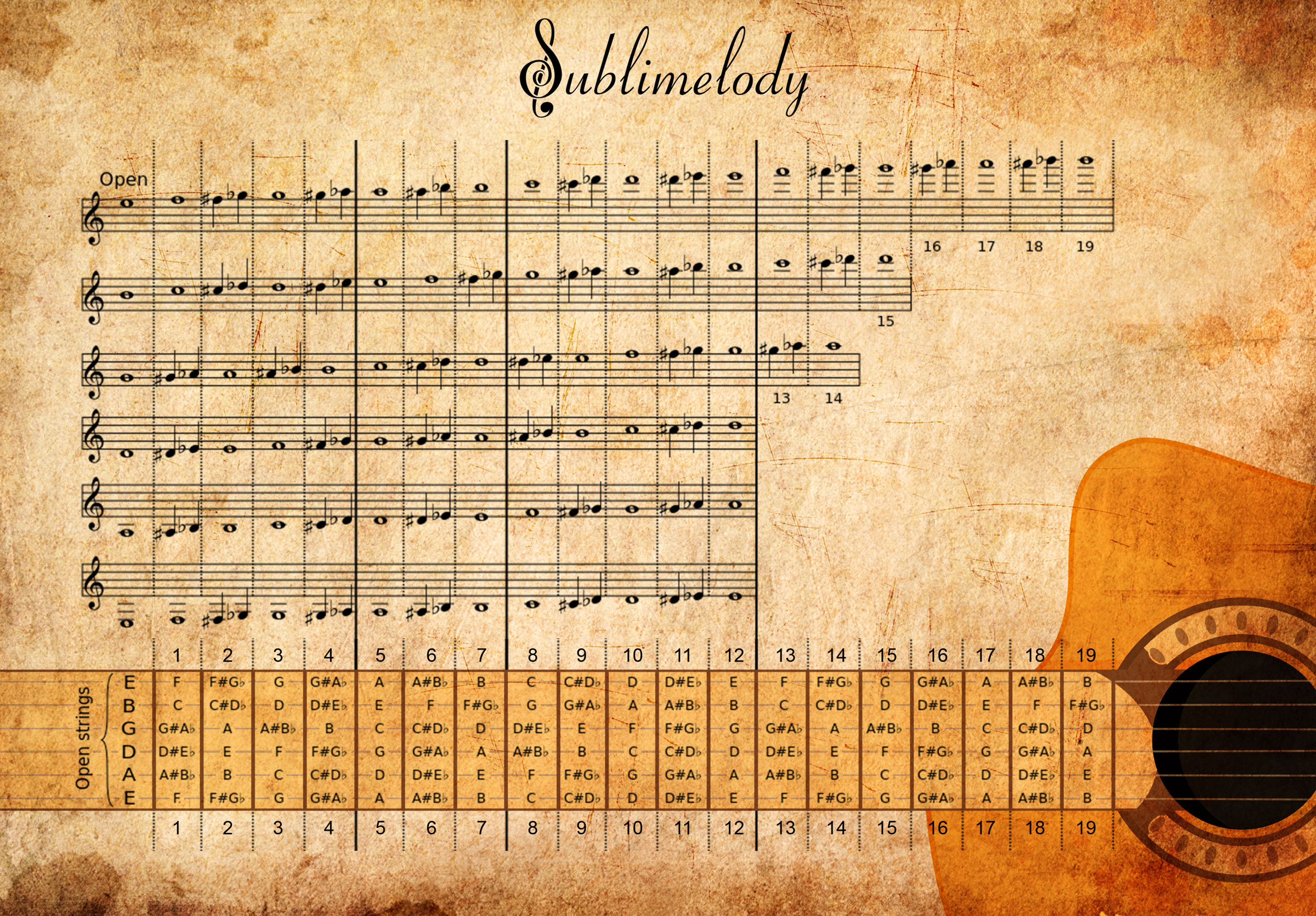
The diagram below shows you the connections between music notes and their corresponding string-frets on a standard classical guitar fretboard.

As you already know, we use the treble clef in guitar sheet music.

Each music note on the sheet music often has two or more corresponding string-frets on the guitar fretboard.


We call the string numbers by standard order. From the bottom to the top of the diagram above:

  • E (on the bottom) is the 6th string
  • A is the 5th string
  • D is the 4th string
  • G is the 3rd string
  • B is the 2nd string
  • E (on the top) is the 1st string


Let’s see how we can use the chart above to read music note and its corresponding string-frets:

Where is this note on the fretboard (G4)?

Look at the diagram above, we can see its positions on the fretboard are:

  • 5th string and 10th fret
  • 4th string and 5th fret
  • Open 3rd string


It’s not so hard, isn’t it?

Well, from a pianist point of view, it’s a bit complicated to learn guitar notes. Since to play the G4 note, we have 3 positions to choose from.

And each string is like a mini-piano-keyboard. Therefore, we have 6 keyboards!

Now, let’s move to the next section to see how music notes and piano keys are connected.

2. Music Notes And Keys On The Piano Keyboard

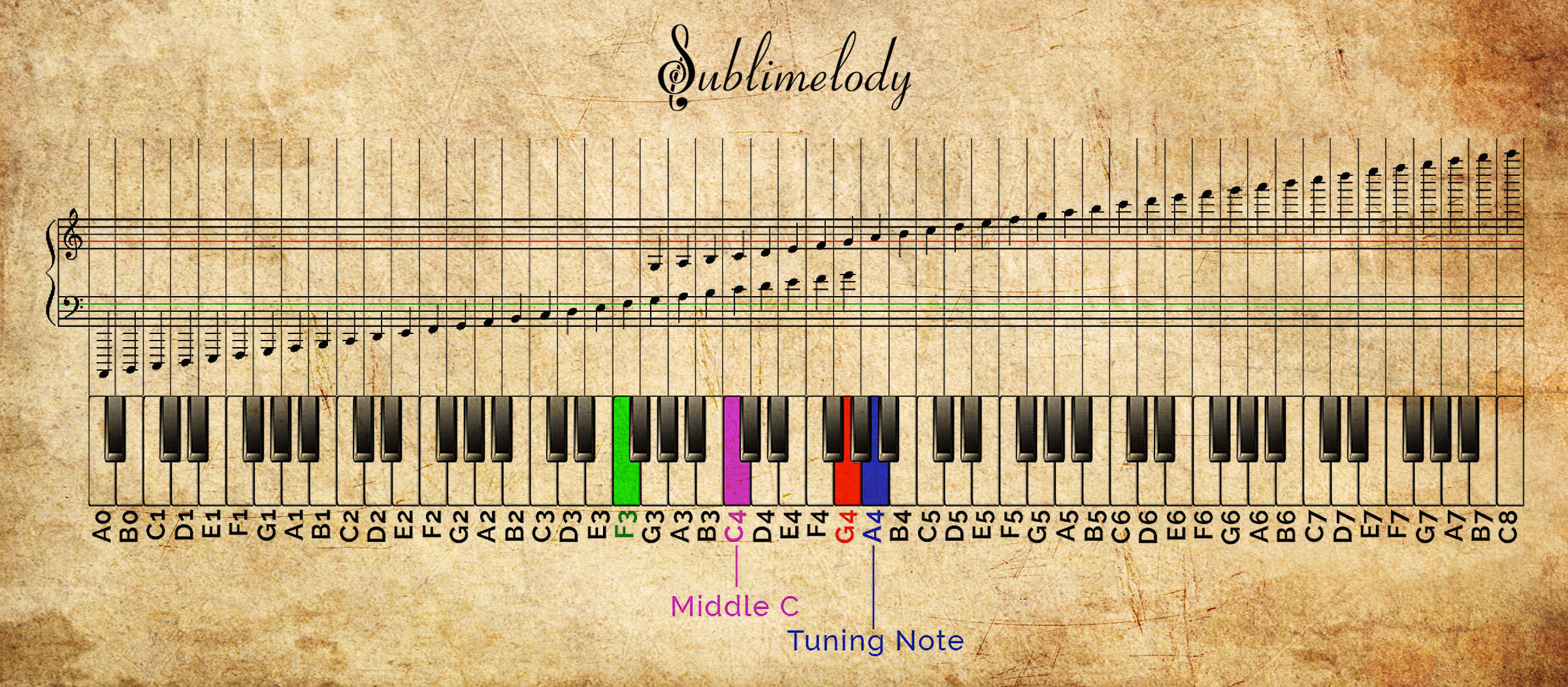
The diagram below shows you the connection between music notes and piano keys.

It may seem complicated at first, but if look closely, you will see that’s pretty simple.


From a guitarist point of view, a piano keyboard is just a string of a guitar. Each piano key is similar to a guitar fret.

The difference is the this “piano string” is much longer and presents wider pitch range than a guitar.


So, learning piano notes seems pretty easy for a guitarist.


Also, you may wonder what is the name of the clef below the treble clef. It’s the bass clef.

In piano, the left-hand plays notes on the bass clef and the right-hand plays notes on the treble clef.


If you want to learn more about reading piano notes and piano keys, and how to do sight-reading fast without memorizing a bunch of facts, click here to visit the visual guide from Sublimelody.


3. The Connection Between The Guitar Fretboard And The Piano Keyboard

Combine 2 diagrams above, and we have the following illustration:

Now, I guess you’ve got the point how music notes, piano keys, and guitar string-frets are connected.


And that’s it for my guide.


If you have any question about this guide, please visit sublimelody.com to get in contact.

The role of a guitarist in theatre and musical performance

Becoming a guitarist in a musical theatre orchestra is no easy feat. The guitar is one of the most popular instruments that people learn and there are huge numbers of very proficient guitarists in the UK, many of which are vying for very few guitarist vacancies.

Performing in a musical theatre orchestra is very different to performing as a solo classical guitarist and classical training is not deemed necessary. You will need a good degree of skill but you also need to be able to learn pieces quickly and the ability to read music is essential. You also need to be able to play with other musicians which is a skill in itself. The best experience you can have if you are considering trying out as a musical theatre guitarist, is to spend as much time playing as many songs, with as many people, as possible.

The styles of music that you may be asked to play will range hugely, from rock to reggae, from classical to jazz. Flexibility is the best trait you can possess. Because of this, many guitarists in theatre orchestras do not have classical training. If it is your goal to become one then don`t spend hours and hours practicing Segovia but rather spread your practice time over as many styles as possible.

Another important point to bear in mind is this – being the guitarist in a musical theatre orchestra will not make you a star. If you are looking to be famous then you should start a band and write popular music, then, if you are good enough, you might just make it. Even the best classical guitarists in the world are virtual unknowns. Only guitarists like Eric Clapton or Keith Richards become household names.

Nor will you be the star of the orchestra itself. In an orchestra, everyone is equal and the guitarist is nothing special. In fact, as the guitarist you may find yourself with nothing to play for long stretches of the performance. This is another skill that you will need, the ability to concentrate for long periods of time and the patience to wait for your time to play.

If flexibility is the best trait to have to get on as a professional guitarist then a close second is doggedness. You will most likely need to audition for many jobs before you land one and you will need to either already have, or quickly develop, a thick skin to deal with rejection after rejection. However, it`s not all doom and gloom. Once you have a few jobs under your belt you become much more appealing to musical directors looking for a guitarist. As you gain more and more experience you should find work more and more easy to come by.

The key point is that it isn`t the most talented musicians that make it. Yes, you do need a certain amount of talent but it is determination and flexibility that really matter.

Rates of pay vary depending on the size and location of the theatre. A guitarist in a large London theatre is likely to receive more money per performance than in a small, provincial one. Orchestra members in popular theatres in large towns and cities may be contracted and paid a salary whereas touring performances, or small town theatres, will usually pay per performance on a self-employed basis. It is hard to make more than 20,000 per year as a professional guitarist and many subsidise their income by giving guitar lessons and performing as session musicians for recording artists.